I find myself in the position of wanting to write a review of my family medicine rotation, the only problem being that it’s six months worth of reflection which seems like an enormous task. Six months is a very long time it seems. There’s so many experiences that I’ve already forgotten (because unlike what I told myself at the beginning of the year when I was adamant that I would write as the block progressed, I did not). I suppose that’s some of the nature of healthcare. It feels like a million and one patients walk through the door and while it may be a defining experience for them in terms of receiving information that may alter the course of their life (or not, there’s a lot of healthcare that is just as routinely forgettable for the patient as for the doctor), it takes a little more to become implanted in the mind of the caregiver.

I spent my six months of the rotation at a small district hospital. The hospital is run by family medicine physicians directing the movements of medical officers (MOs), community service MOs, and some interns of debatable usefulness. The nature of district level care is such that it contains a little bit of everything. Some days were spent sorting out the patients in the ward, some days were spent in various clinics seeing the seemingly endless stream of chronic and acute patients. All my calls were spent in the emergency center with the occasional dash out to the maternity ward to assess a woman in labour, to the ward to certify a death, or to theater to assist in an emergency operation. Days in theater were split between learning anaesthetics and surgical skills. Time in maternity was spent remembering how much I prefer to have a work environment that doesn’t have the background sound of women screaming and praying that I’d manage to get the drip up into the tiny infant in the neonatal room.
Clinics
An endless stream of similar complaints get merged into one in the memory, basically all the clinic patients I saw have blurred into one amorphous human of non-adherence to their medication despite their worsening blood pressure and glucose levels. Some moments stand out; like the lady who told me she only takes one pill in the morning and one in the evening but was scripted five or six different types of medications and was adamant she was taking all of them. After an incredulous questioning, it became clear that she was indeed taking all her medications, but only one pill at a time with two hours between doses. My initial inquiry over how many pills she took each morning and night had not accounted for the possibility of her being certain one could not take more than a single medication at a time. There’s also the distinct moment of awed confusion when an elderly lady waltzed into the room with ease and asked when she may be considered for a knee replacement as her left one was starting to twinge in the more difficult yoga positions (in case you’re wondering the answer was once she couldn’t walk, and then she’d probably get added to the orthopaedics 1000 name long waiting list for knee replacements). Sticky notes, in their various forms of torn paper, to masking tape, to stickers, are the doctors’ (sometimes passive aggressive) notes to the rest of the clinic staff about what still needs to happen and to the patient about where to go next, e.g.
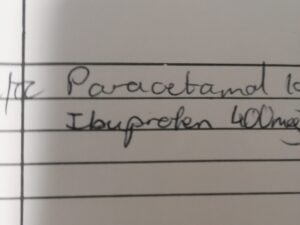
- Pharmacy for collection of chronic medications and adjustments by the pharmacist
- The vitals room for repeat blood pressure and some bloods drawn
- The clerk for booking of a follow up date, transport for their appointment in George, and copying of notes as the referral letter
Whether any of these things happen after the patient has left the room, will only be known if and when they get a follow up appointment to yet again state that they forgot to take their blood pressure medication this morning and so any attempt at assessing control is useless. Family medicine can get frustrating when all your attempts at prevention of illness are ignored and then you see the patient in hospital from uncontrolled chronic conditions.
Wards
The large hospitals, where I learnt medicine, have a labyrinth of wards through which your patients may be scattered leading to an endless niggling in the back of my mind that there may be someone, lying somewhere in the rows of identical cubicles, with some condition, that is living off of hospital food with no change in their medical plan apart from whatever was written the last time they were seen.. Thankfully, this is not a possibility in smaller hospitals. There’s male ward, female ward, paeds ward, and maternity. If you haven’t found the patient in one of those places and they’re no longer in the emergency center then you can rest assured that they have exited the hospital in one form or another (possibly using sheets as ropes to climb out the window – this happened) and are no longer your responsibility (except when they still are because if there’s any concern of the patient’s mental competence the police now need to track them down). If you’re assigned to the wards it also means that every patient there is under your care and you can’t skip a few beds because they have surgical conditions and you’re on the medicine team. Everyone belongs to family medicine. The variety of cases were truly astounding; everything from infected hands and broken limbs, to end stage HIV, stroke patients, those who’ve just had a heart attack, long stay psych patients waiting for a bed to become available in a specialist unit, and down referrals from every branch of medicine and surgery.
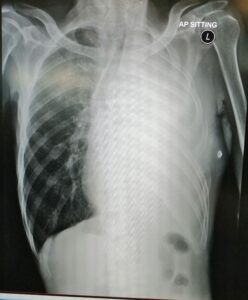
The wards can feel like a never ending round of problems to sort out but it’s also a place where you get to think and learn about some interesting medical conundrums. A knowledgeable senior makes the time stimulating and productive while when you’re on your own it feels like an overwhelming amount of sickness and work.There’s an inordinate amount of time spent on the phone or computer trying to sort out admin for a patient to get from point A to point B and seen by Doctor C on date D while having had test E done at time F except then they actually have to be referred to Doctor G at hospital H because Hospital I doesn’t deal with condition J but then it’s actually Doctor K on call so please can you chat to them (I may have gotten a little carried away here with the analogy but it really does feel like you’re fighting a system some day).
Theater

Theater is a favourite place for many doctors. It’s a calm, controlled environment with one patient at a time and cool procedures to do. I was grateful for any day that I had in theater as it always felt like the eye of calm in the storm of the hospital. There’s a lot more opportunity for teaching and time for some chats with colleagues. At the district level in family medicine, theater cases are limited to less specialised ones and lots of lists that can be done under local anaesthetic. This means lots of caesarean sections ( I think I’ve finally reached that point where I can spell ‘caesarean’ with all the ‘e’s and ‘a’s in the right place most of the time), some appendicectomies, evacuation of uteruses, removal of skin lesions, prostate biopsies, tubal ligations, leg amputations, as well as the dental extractions for kids. I got to be the anaesthetist some days and the surgeon other days, as well as the assistant when there were visiting specialty lists (plastics, general surgery, orthopaedics, urology).
Emergency Center
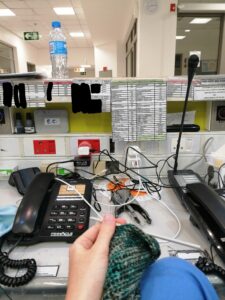
The ‘EC’, or casualty, or ER, or A&E, or any other number of names all refer to what could be considered the heart of the hospital. That chaotic center of action made up of seeing a never ending line of patients with complaints that vary from “my urine is burning” to “I think I’m having a heart attack”. It’s the part of the hospital that most often needs to call for back up and the place you will go if the work elsewhere is done. All of my calls for the block were spent in EC. From 4pm onward, whether I’d spent the day in clinic, the wards, or theater, I’d head down and settle in for the next 16 hours of non-stop hustle. The patients are triaged by the nursing staff as they enter. Red will get you seen almost immediately (since you’re about to die). Orange within the next 10 min to 2 hours (depending on how many other super urgent patients there are and how long it takes to sort them out since you are not immediately going to leave this world but you may if we don’t get to you in a timely fashion). Yellow patients will have a wait of anywhere from 1 hour upwards. We try to get to you as soon as possible but often this pile of files grows while there’s an endless stream of orange and red patients entering through the doors. Green patients will be seen when we get to you. The issues are almost always something that could have been sorted out at the local clinic without a trip to the emergency department. It does always amaze me that people will have a problem for months then decide one night that they cannot possibly wait another moment for help and so seek it for the first time at 2am (when all our support services – xrays, labs, clerks, specialists – are not available).
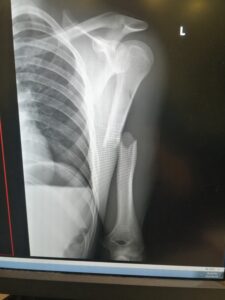
That was one particularly difficult part of working in a small hospital. We don’t have xrays at night and we don’t have a lab for blood results. Of course, if we need to then we phone one of the radiologists to drive in from home and take a couple of xrays for us while knowing that they will still be expected to be at work the next day for their full 8-5, so we only phone them if it will change our management of the patient in that moment.. Most broken bones can be put in a backslab cast and xrayed in the morning. Most chest xrays are not that urgent. But there are many cases that do require some magic pictures: when you’ve been stabbed in the chest, when you’ve been intubated, when there’s a joint dislocation, an open fracture, an acute abdomen with potential organ rupture, and many more. With Murphy’s medical law, this means that the radiologist will be called in a second time as they’ve just arrived home. Point of care blood tests like INRs and blood gases are crucial to correctly manage serious conditions.
There’s many, many more things to say about my time at the district level and I definitely plan to (she says with all the self-discipline of a toddler with a marshmallow in front of them), but seeing as how I have now already finished anaesthetics and am halfway through psychiatry this incomplete, poorly edited draft shall have to suffice for the moment. If you’re interested in a more thorough picture of my six months in the district level of health care, then there are my daily reflections on instagram from that time that contain far more genuinely in the moment thoughts about the situations I encountered. Feel free to contact me with any questions or thoughts that you have about this jumbled piece of writing or about life in medicine in general.
Parts 1-4 of my reflections on internship can be read here – surgery, obstetrics, paediatrics, and internal medicine.
I’m off to go second guess all my choices on where to apply for community service.
- Baby Elephant Crochet Pattern
- My Internship: Part 5 – Family Medicine
- My Internship: Part 4 – Internal medicine
- My Internship: Part 3 – Paediatrics
- The Tale of Tabitha Twitchett
Visit my Instagram page: @speckledtortoisehttp://www.instagram.com/speckledtortoise